What is a 'Leonard Cohen Writing Retreat'?
- Anna Kwiecinska
- 6 hours ago
- 5 min read
by Joanne Fedler
I was nineteen when I first heard Leonard Cohen sing about a famous blue raincoat, torn at the shoulder and oranges that come all the way from China. My father couldn’t understand why I was listening to ‘a depressive who couldn’t even sing.’ I had a crush on him long before everyone was getting ‘There’s a crack in everything’ tattooed on their vulnerable bits.
He was the first artist I discovered on my own, and about whom I made my own mind up
instead of having my fascinations sold to me by popular culture. Unlike many of my imbibed appreciations since then, Leonard Cohen is not a derivative passion. I was dismayed when he became popular again in his old age, as if something precious to me just got passed around and felt up, and was back in my lap, grubby and dog-eared.
Over the past almost forty years, I’ve read all the books he wrote, and dozens written about him.
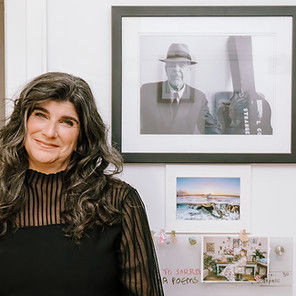
I’ve watched every documentary about his life and music. A framed picture of him hangs above my writing desk. His songs take us on a journey through myth and the stories of the Bible; longing and sexuality; and finally, transcendence of the whole human enterprise.
I’m not the only one who regards him as one of the seminal muses of my creative life. Those of us who have found our way to him, have a unique relationship with what his work means to us.
Apart from the poetry in his songwriting, what distinguishes him for me, from other poets and singers is his devotion to the sacred. He spent years in a monastery to become an ordained Buddhist monk. His spiritual sensibility was expressed through his Jewish soul, just as the grief of losing his father as a young boy shaped everything he wrote thereafter. At nine, after the burial, he wrote a message and folded it into one his father’s bowties and buried it in the garden.
Later, he claimed that all his writing grew out of that one sacred, intuitive, ritualistic act. It’s an image I keep returning to, that child reaching beyond the limits of his grief to mark the page. Perhaps this was what tied him to the ‘Batkol’ – a Hebrew word meaning the ‘divine voice’ which he described as another deep reality singing to each of us all the time, sometimes impossible to decipher. He said: ‘As I grew older, I understood that instructions came with this voice. What were these instructions? The instructions were never to lament casually. And if one is to express the great inevitable defeat that awaits us all, it must be done within the strict confines of dignity and beauty.’
He could spend ten years on a verse, waiting for the words he could wrap his voice around. As a writer, I’m humbled by the commitment of that labour. Perhaps I have no real sense of the dignity and beauty that kind of patience and diligence might yield.
Cohen was fastidious about seeing through his own cliches, pushing himself (and his audience in turn) to move beyond ideas, as lofty as they may be (climate change, peace, vegetarianism). He recognized what he called, ‘a lazy truth.’ He believed there was something more profound to be made from ‘ideas,’ and claimed, ‘I like to work on a song until those slogans, as wonderful as they are and as wholesome as the ideas they promote are, dissolve into deeper convictions of the heart. I never set out to write a didactic song. It's just my experience. All I've got to put in a song is my own experience.’
As a writing mentor, I try to instill this simple truth into each person who comes to me hopeful to write something real - everything our creativity asks, is already within us, waiting to be discovered and to knock us giddy with its audaciousness. We are not here to be tame or worse, be tamed by life. Cohen believed art should have enough ‘danger.’ A thought ‘in flames’ excited him.
This vision of what creativity demands, kindles something in me. Sometimes, when I am bored, baffled by life and undone by failure, I turn to his songs for a whisper of startling insight, to help me reset, begin afresh, as the opening of ‘Anthem’ goes: ‘The birds they sang, at the break of day, start again, I heard them say.’
For Cohen, writing was a practice to hammer out the controversies of the spirit: ‘A writer is
deeply conflicted and resolves her conflict through the writing,’ he attested. Writing, if we allow it, takes us to our inner depths where we can shake off the tedium of our own predictabilities.
Even our own patterns, he suggests, should be imperfect and catch us side-on.
As listeners or readers, we are often caught off-guard in his songs. ‘I’m tired of choosing desire, I’ve been saved by a blessed fatigue,’ he sings - and there it is – the surprise, the word that snags us, ‘saved.’
In a world that eschews anything that is not active, proactive and energetic, how is it that we are rescued by weariness? Perhaps when we finally outgrow the stories of ‘success’ by which we measure our lives, we are released and redeemed.
With Cohen in the background as I write, I slacken my certainties. I swerve from the obvious, and I dare repeat myself. People don’t often realise how funny Cohen is. He once confessed that ‘there’s a joke in every song,’ humour of course, being a surge of the unexpected. How can one not break softly into a chuckle, upon hearing the self-deprecation and quiet self-knowledge in:
‘Have mercy on me baby, after all I did confess
I know you have to hate me, but could you hate me less?’
‘Ah but don’t go home with your hard-on
It will only drive you insane
You can’t shake it (or break it) with your Motown
You can’t melt it down in the rain.’
‘Everybody knows that you’ve been faithful
Ah, give or take a night or two’
‘Everybody knows you’ve been discreet
But there were so many people you just had to meet without your clothes.’
‘You told me again you preferred handsome men
But for me you would make an exception.’
Though sometimes revered as a modern-day prophet, he never took himself too seriously. His wisdom moved from the sublime (‘I found that things became a lot easier when I no longer expected to win. You abandon your masterpiece and sink into the real masterpiece.’) to the ridiculous: ‘Never make a decision when you need to pee.’ (Beautiful Losers)
I have turned my lifelong fascination with his lyrics into a five-day writing retreat on the island of Hydra, where he spent many years. During the workshops, we will take up the invitations in his language to break our old patterns, experiment with things unkempt with wildness and search for our own secret chords.
CHECK In HERE for more details about 'Ring The Bells!', Joanne Fedler's Creative Writing Retreat on the Island of Hydra


Comments